Author
Books like Julien Gracq
3 books we recommend to Julien Gracq readers, drawn from The Opposing Shore — each with the reason why.
If you loved The Opposing Shore
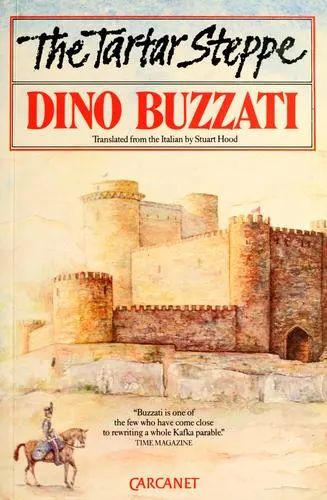
Lieutenant Giovanni Drogo arrives at a remote fortress overlooking an empty desert, where the possibility of an enemy attack gives shape to otherwise uneventful days. Buzzati understands, as Gracq does, that anticipation can be more intoxicating than action: distant terrain acquires an almost erotic authority, while routines and rumors slowly alter one’s sense of time.
The prose is sparer than Gracq’s, but that austerity makes every watchtower, road, and patch of darkness portentous. Widely regarded as Buzzati’s masterpiece and one of the great twentieth-century novels of waiting, The Tartar Steppe turns suspended expectation into an entire philosophy of desire. If Aldo’s attraction to the forbidden horizon haunted you, Drogo’s vigil is indispensable.
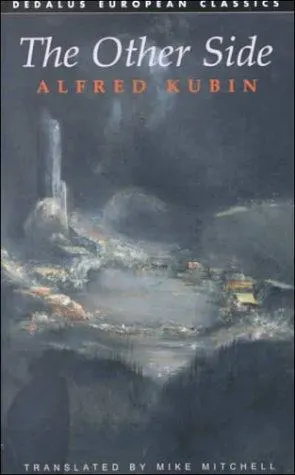
An artist is invited to join the Dream Realm, a secluded state founded by the enigmatic Patera. Its capital, Pearl, is assembled from old buildings, governed by obscure prohibitions, and permeated by an atmosphere in which physical reality and collective nightmare become difficult to separate.
Kubin, better known as a visionary draftsman, illustrated this—the only novel he wrote—with images as febrile as the prose. Like Gracq, he makes geography psychological without reducing it to allegory: streets, weather, objects, and architecture seem to possess desires of their own. Published in 1909, The Other Side became a cult landmark of fantastic and Expressionist literature. Its dream-state is stranger and more grotesque than Orsenna, but anyone susceptible to Gracq’s beautiful, ominous unreality should experience Pearl firsthand.
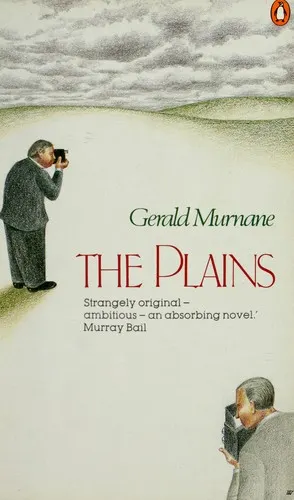
A filmmaker travels inland to seek patronage from the wealthy landowners of the plains. He soon finds that these men regard landscape not as scenery but as an inexhaustible system of symbols, loyalties, colors, memories, and rival theories. The promised film recedes as contemplation itself becomes the drama.
Murnane replaces Gracq’s lush menace with crystalline abstraction, yet the affinity is profound: both writers turn an invented territory into a state of consciousness and make deferred action feel charged rather than empty. The Plains is the compact masterpiece at the center of Murnane’s international reputation, passionately admired for seeming unlike any other novel. It offers the peculiar thrill of discovering that maps, horizons, and waiting may contain an entire hidden metaphysics.