Author
Books like Jonathan Swift
3 books we recommend to Jonathan Swift readers, drawn from Gulliver's Travels — each with the reason why.
If you loved Gulliver's Travels
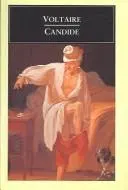
No novel matches Swift’s combination of intellectual ferocity and comic speed more closely. Voltaire sends his guileless hero through a world whose wars, disasters, hypocrisies, and casual cruelties repeatedly demolish the comforting philosophy he has been taught—all in prose so brisk and deadpan that horror becomes horribly funny.
Like Swift, Voltaire distrusts any grand theory that explains suffering too neatly. Candide remains one of the indispensable works of European satire because its jokes still expose habits of mind flourishing today: complacent optimism, ideological certainty, and the ingenious excuses people make for power. It is short enough to read in an evening and sharp enough to trouble you for years.
Butler learned from Swift how an imaginary country can reveal the strangeness of the reader’s own. In Erewhon, familiar moral assumptions are rearranged with unnerving plausibility: illness is treated as criminal, misconduct as disease, and respectable institutions become elaborate monuments to collective nonsense.
The pleasure lies in watching each inversion unfold with the sober logic of a travel report. Butler’s startling chapters on machines helped make Erewhon an ancestor of modern dystopian and speculative fiction, but the book is more mischievous than prophetic: it asks how many absurdities become invisible simply because everyone agrees to call them normal. Anyone who relished Swift’s Houyhnhnms will recognize that exhilarating moment when satire stops being a joke about others and turns its gaze on you.
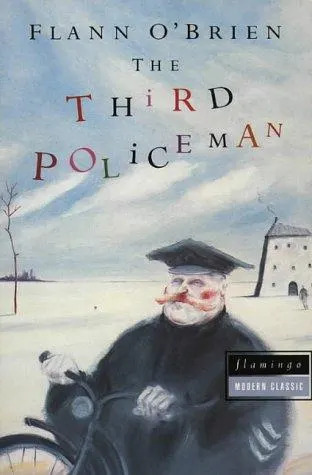
The Third Policeman begins with an unnamed narrator entering an Irish police station and gradually discovering that ordinary logic has been replaced by something stranger, more exact, and much less safe. Its policemen deliver lunatic theories about bicycles, identity, and matter with the serene authority of Gulliver describing Lilliputian law.
O’Brien’s great trick is to make nonsense internally rigorous. The result is at once a comic masterpiece and a metaphysical nightmare: every verbal misunderstanding opens another trapdoor beneath reality. Rejected in O’Brien’s lifetime and published posthumously, it has since acquired the devoted readership reserved for books that feel like secret discoveries. If Swift’s straight-faced impossibilities delighted you, missing this uniquely funny, sinister novel would be a genuine deprivation.