Author
Books like John A. Williams
3 books we recommend to John A. Williams readers, drawn from The Man Who Cried I Am — each with the reason why.
If you loved The Man Who Cried I Am
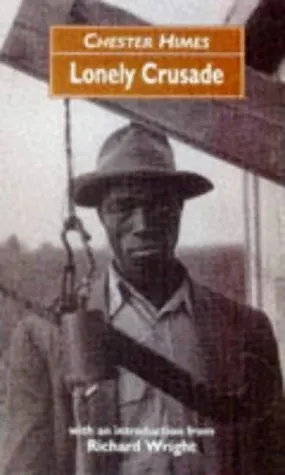
Himes brings the same furious intelligence to institutions that Williams brings to publishing, diplomacy, and American power. Lee Gordon, a Black organizer in a wartime aircraft factory, moves through a treacherous field of unions, Communists, management, and white liberals, each demanding his usefulness while resisting his independence.
The novel’s great subject is ideological betrayal: noble language repeatedly collides with appetite, vanity, racism, and fear. Himes writes arguments as combat and political organizations as rooms thick with suspicion. Long overshadowed by his Harlem crime novels, Lonely Crusade is among his most ambitious works—a bitter, psychologically exposed portrait of a man discovering that every available alliance may require self-mutilation. Anyone gripped by Williams’s refusal to make politics morally tidy should regard it as essential.
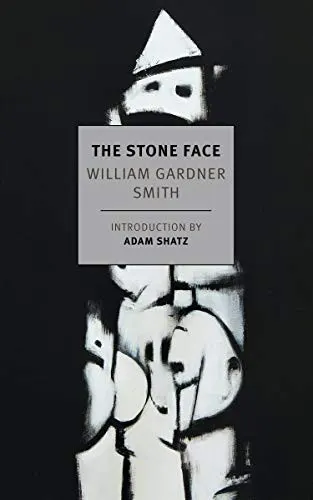
Paris initially appears to offer Simeon Brown what Europe offered many Black American artists: distance, freedom, and the possibility of remaking oneself. Smith steadily destroys that consoling expatriate fantasy. Simeon encounters a society capable of treating him as an American while directing its racism elsewhere, especially toward Algerians.
What makes the book a true companion to Williams is its pressure on the privileged witness. Seeing clearly is not enough; cosmopolitan sophistication can become another form of evasion. Smith, himself a Black expatriate journalist in Paris during the Algerian War, gives the novel the dangerous immediacy of observed history. The Stone Face was neglected for decades, but its recovery has revealed a remarkably uncompromising novel about solidarity—one that leaves no refuge untouched by politics.
Dan Freeman becomes the CIA’s first Black officer, masters the institution’s methods, and understands exactly what its tokenism prevents it from seeing. Greenlee turns double consciousness into tactical power: Freeman’s enemies misread composure as obedience and invisibility as insignificance.
The prose is leaner and the humor more incendiary than Williams’s, but the novels share a fascination with secret knowledge, compromised elites, and the lethal underside of official American language. Greenlee’s book became an underground classic because it does not merely denounce the system; it imagines what an exceptionally disciplined man might do after learning how that system protects itself. Its audacity still feels illicit, and its satire still has teeth.