Author
Books like Horacio Castellanos Moya
3 books we recommend to Horacio Castellanos Moya readers, drawn from Senselessness — each with the reason why.
If you loved Senselessness
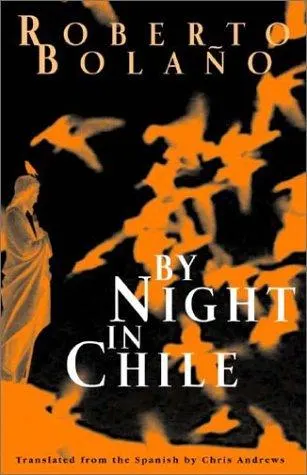
A dying priest and literary critic spends one sleepless night defending his life, while his cultivated anecdotes steadily expose what his refinement has allowed him not to see. Bolaño sustains the novel in a single rushing paragraph, making self-justification as compulsive—and as grimly funny—as the proofreader’s spiraling monologue in Senselessness.
The crucial kinship is moral comedy: both narrators are intelligent enough to recognize horror yet vain, frightened, and compromised enough to turn recognition into evasion. By Night in Chile is among Bolaño’s most concentrated achievements; in barely more than a hundred pages, it makes literary culture, political terror, and personal cowardice inseparable. Missing it would mean missing perhaps the sharpest companion piece to Castellanos Moya’s novel.
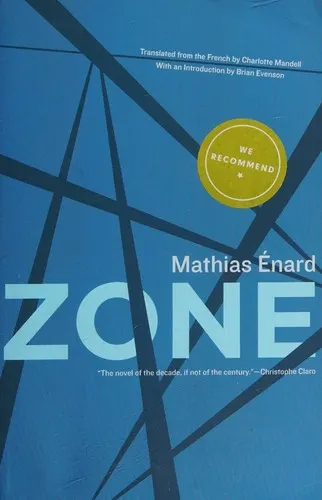
During a train journey to Rome, an intelligence agent carries a briefcase of documents while his mind ranges across the wars, massacres, betrayals, and private disasters of the Mediterranean. The enormous opening sentence barely permits a pause, pulling the reader into a consciousness crowded with the dead.
Like Senselessness, Zone asks what repeated exposure to testimony does to a damaged, implicated mind. Yet Énard expands that pressure from one national catastrophe into a whole geography of recurring violence. Charlotte Mandell’s English translation won the Best Translated Book Award, and its virtuosity is not ornamental: the breathless form makes history feel physically impossible to set down. It is demanding, hypnotic, and unforgettable.
A writer gains access to Guatemala’s vast police archive and begins taking notes on its dossiers, bureaucratic peculiarities, and traces of state violence. What starts as research soon acquires an atmosphere of surveillance and instability: the archive is not safely historical, and the researcher is never merely an observer.
Rey Rosa’s spare notebook form is the opposite of Castellanos Moya’s verbal torrent, which makes the resemblance more revealing. Both novels understand documents as contaminated objects and writers as ethically dubious intermediaries—curious, frightened, opportunistic, and vulnerable to the words they process. The Human Material turns administrative fragments into a chilling meditation on who controls memory. It is one of Rey Rosa’s essential books and an indispensable extension of the questions Senselessness leaves burning.