Author
Books like Gustav Meyrink
3 books we recommend to Gustav Meyrink readers, drawn from The Golem — each with the reason why.
If you loved The Golem
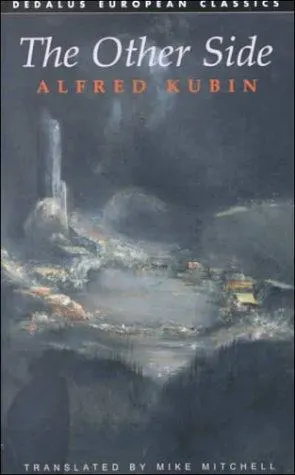
The closest true companion to Meyrink’s novel is this feverish masterpiece by the Austrian visionary artist Alfred Kubin. Its narrator travels to the Dream Realm, an isolated state assembled from obsolete buildings and ruled by the mysterious Patera. From that premise Kubin creates not conventional fantasy but an entire diseased consciousness: streets, weather, animals, crowds, and architecture seem subject to one vast nightmare logic.
Like The Golem, it moves effortlessly between grotesque comedy, spiritual dread, and apocalyptic hallucination. Kubin’s own illustrations make the book feel like an artifact smuggled out of its impossible city. His only novel became a landmark of expressionist literature; anyone drawn to Meyrink’s sense that matter itself may be dreaming should consider it indispensable.
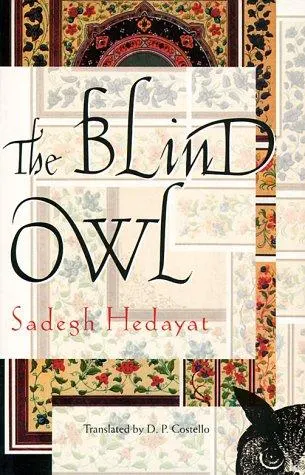
Read this when what captivated you most was Meyrink’s erosion of stable identity. Hedayat begins with a solitary man haunted by an image he cannot explain; from there, perception folds in on itself. Faces recur, time doubles back, and every apparent certainty acquires the treacherous clarity of an opium vision.
The prose is spare where Meyrink is crowded, intimate where Meyrink is panoramic, yet the metaphysical unease is just as potent. The Blind Owl is widely regarded as a foundational work of modern Persian fiction, and its obsessive imagery has inspired generations of devoted, unsettled readers. It is short enough to consume in a night and deep enough to contaminate your dreams for years.

Malpertuis offers the sinister pleasure of entering a building that seems to possess more reality than its occupants. A dying patriarch summons his heirs to a decaying mansion and binds them to its peculiar conditions. The inhabitants are theatrical, repellent, funny, and frightening; the house hoards secrets that no single account can fully contain.
Jean Ray tells the story through nested manuscripts and competing testimonies, so reading becomes an act of occult detection. Yet its real kinship with The Golem lies in the charged atmosphere: shabby rooms and eccentric bodies continually threaten to disclose some enormous metaphysical design. Long cherished as a cult classic of Belgian fantastique, Malpertuis combines Gothic exuberance with genuine ontological terror. To miss it is to miss one of European weird fiction’s grandest haunted structures.