Author
Books like E. L. Doctorow
3 books we recommend to E. L. Doctorow readers, drawn from The Book of Daniel — each with the reason why.
If you loved The Book of Daniel
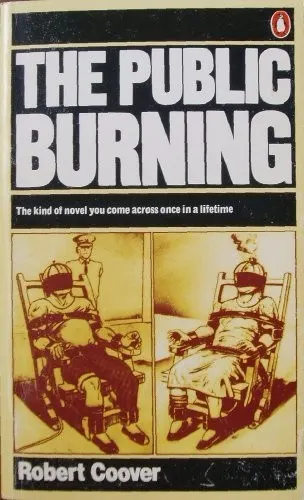
Coover revisits the Rosenberg execution not to reconstruct it soberly but to turn it into a grotesque national pageant, narrated partly by Richard Nixon and presided over by a demonic Uncle Sam. Where Doctorow makes history intimate and psychologically corrosive, Coover makes it carnivalesque: propaganda, celebrity, sex, patriotism, and punishment become inseparable.
A landmark of American postmodern fiction, this is the fiercest companion to The Book of Daniel because it attacks the same underlying fraud—the pretense that political violence can be converted into a clean moral story. Its comic excess is exhilarating until you realize how little Coover has needed to exaggerate.
In 1972, two antiwar radicals undertake an action that forces them to disappear into new identities. Decades later, Spiotta examines what remains of their convictions and what their choices have bequeathed to a younger generation.
This National Book Award finalist has Doctorow’s gift for making ideology feel neither foolish nor pure. Spiotta understands that radicalism can contain courage, vanity, love, self-deception, and irreparable harm all at once. Her shifting forms and voices also capture the way political memory breaks into competing documents and performances. Few novels are as unsparing—or as unexpectedly tender—about what happens when revolutionaries survive their revolution.
Historian John Washington returns to rural Pennsylvania after the death of the man who helped raise him and begins probing the obscure circumstances of his father’s death. Evidence arrives through records, local lore, inherited objects, and stories whose truth cannot be separated from the needs of the teller.
Like Daniel, John uses historical inquiry as both weapon and defense: if he can master the past intellectually, perhaps it cannot master him emotionally. Bradley’s great achievement is to show the archive giving way to imaginative moral reckoning without making either one sufficient. Winner of the PEN/Faulkner Award, The Chaneysville Incident is one of the essential American novels about historical inheritance—and far too powerful to remain as comparatively underread as it is.