Author
Books like Adrian Tchaikovsky
6 books we recommend to Adrian Tchaikovsky readers, drawn from Children of Time and Dogs of War — each with the reason why.
If you loved Children of Time
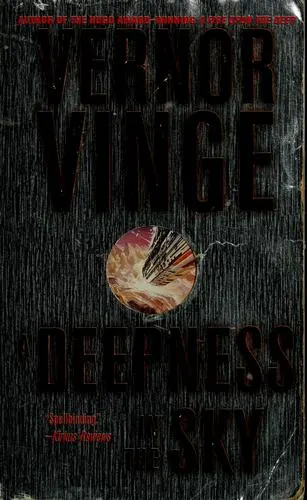
Around an intermittently burning star, two human expeditions discover a technologically emerging alien civilization. Vinge lets readers understand that civilization from within while the humans observe it imperfectly from afar, creating the same potent mixture of intimacy, dramatic irony, and first-contact wonder that powers Children of Time.
This is no sterile exercise in alien design: scientific discovery, political coercion, and individual moral courage lock together into an extraordinarily tense story. Winner of the Hugo Award and widely regarded as one of modern hard SF’s major achievements, it is perhaps the closest predecessor to Tchaikovsky’s feat—and far too gripping to be treated merely as homework.
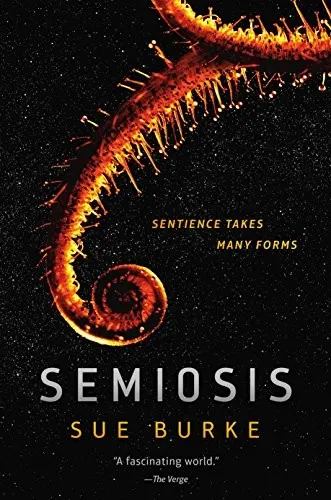
Burke asks a deceptively simple question: what if colonists landed not in an untouched wilderness, but inside an ecosystem capable of judging and manipulating them? Told across successive generations, Semiosis watches the settlers’ assumptions erode as they learn that agriculture, diplomacy, and domestication may look very different from the other side.
Its kinship with Children of Time lies in its patient construction of intelligence as something shaped by biology rather than disguised humanity. Plants communicate through chemistry, reward, and control; every apparent breakthrough raises unsettling questions about cooperation and agency. Burke’s acclaimed debut makes ecological interdependence feel as dramatic as warfare—and permanently changes how an ordinary garden can look.
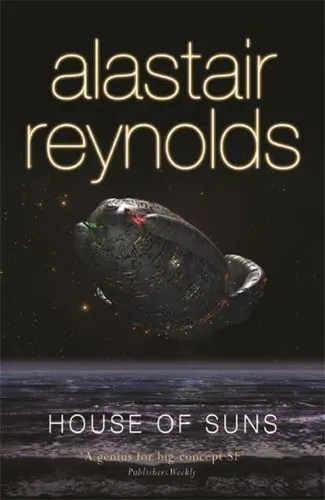
If what thrilled you most was the sensation of history unfolding on a scale larger than species or planets, read House of Suns. Abigail Gentian has sent cloned versions of herself travelling separate routes around the galaxy; after hundreds of thousands of years, these ‘shatterlings’ reunite to exchange memories of civilizations encountered and lost. Then their ancient community is attacked.
Reynolds combines cosmic distances and audacious speculation with the momentum of a mystery. Yet the grandeur never becomes abstract: fragmented identity, memory, loyalty, and loneliness give those immense spans of time emotional weight. Often singled out even among Reynolds’s acclaimed space operas, House of Suns delivers the rare feeling that the universe is older, stranger, and more crowded with possibility than you had imagined.
If you loved Dogs of War
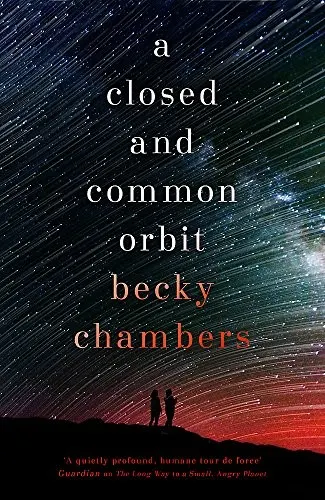
Lovelace, an artificial intelligence designed to inhabit a spaceship, wakes inside an illegal synthetic body and must learn how to be a person rather than a function. Like Rex, she experiences freedom not as simple liberation but as a terrifying absence of instructions: What do you want when wanting was never part of your design?
Chambers replaces Tchaikovsky’s battlefield ferocity with intimate, painstaking acts of care, but she shares his gift for making questions of embodiment, ownership and personhood emotionally immediate. This Hugo finalist helped make the Wayfarers books beloved because its kindness never feels easy or sentimental. If Rex’s halting moral awakening was what lodged in your heart, Lovelace’s will stay there too.
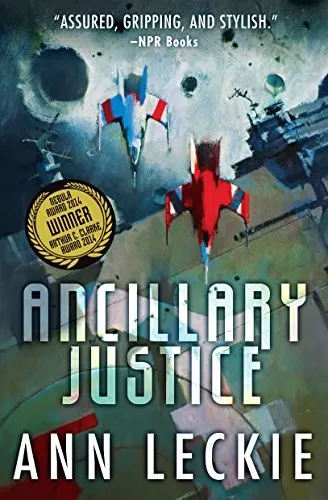
Breq once served an empire as the consciousness of a vast warship, simultaneously inhabiting thousands of human bodies. Now she occupies only one—and carries a private purpose that places her against the power that made her.
Leckie understands, as Tchaikovsky does, that a weapon’s awakening is not merely a route to rebellion. It creates painful questions about culpability, loyalty and whether morality is possible when violence has been built into your identity. Breq’s cool, fractured voice is as essential to this novel as Rex’s deceptively simple narration is to Dogs of War. The novel’s victories at the Hugo, Nebula and Arthur C. Clarke awards reflect how dramatically it expanded the possibilities of military space opera. Its scale is imperial, but its deepest conflict is devastatingly personal: can something created to obey learn to judge its creators?
On a remote Vietnamese archipelago, researchers encounter an octopus population displaying signs of culture, symbolic communication and coordinated intent. A powerful corporation controls the site, while the scientists must decide whether they are studying animals, meeting another civilization—or participating in its capture.
This Locus Award-winning debut offers the same exhilarating shift in perspective that makes Dogs of War so potent: human beings are no longer entitled to define intelligence solely in their own image. Nayler turns philosophy into suspense, grounding debates about consciousness and rights in corporate coercion, ecological destruction and the practical difficulty of communicating across radically different minds. The octopuses never become disguised humans; their strangeness is precisely the point. Few novels make the recognition of another kind of person feel so momentous—or make humanity’s response to that recognition feel so dangerously uncertain.